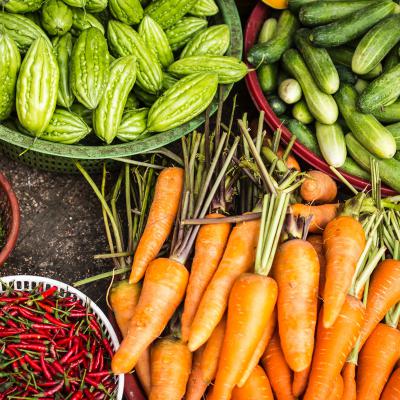
Incorporating organic vegetables into your diet can offer several benefits:
Fewer Pesticides: Organic farming limits the use of synthetic pesticides and fertilizers, which means organic vegetables typically have lower levels of these chemicals. This can reduce your exposure to potentially harmful substances.
Higher Nutritional Value: Some studies suggest that organic vegetables may contain higher levels of certain nutrients, including antioxidants, vitamins, and minerals, compared to conventionally grown counterparts.
Better Taste: Many people believe that organic vegetables have a better taste and richer flavors, possibly due to farming practices that promote healthier soil and plant growth.
Environmental Benefits: Organic farming practices are designed to be more sustainable and environmentally friendly. They typically focus on soil health, water conservation, and reducing pollution, which helps protect ecosystems and biodiversity.
No GMOs: Organic standards prohibit the use of genetically modified organisms (GMOs), so choosing organic vegetables ensures that you are not consuming genetically engineered produce.
Supports Local Farmers: Buying organic vegetables often means supporting small-scale and local farmers who use sustainable farming practices. This can help promote local economies and ensure that farming practices are more transparent and accountable.
Animal Welfare: Organic farming often incorporates more humane animal welfare standards, ensuring that livestock are treated well and promoting overall farm health.
Reduced Antibiotic and Hormone Use: Organic farming standards restrict the use of antibiotics and hormones in livestock, which can reduce the risk of antibiotic resistance and hormone-related health issues.
To incorporate more organic vegetables into your diet:
Shop at Farmers Markets: These are great places to find fresh, locally grown organic produce.
Join a CSA: Community Supported Agriculture programs allow you to buy a share of a farm’s harvest, often including a variety of organic vegetables.
Grow Your Own: If you have space, consider starting a home garden. This gives you control over what goes into your soil and onto your plants.
Prioritize Certain Vegetables: If budget is a concern, prioritize buying organic versions of vegetables known to have higher pesticide residues when conventionally grown, such as spinach, bell peppers, and tomatoes.
Incorporating organic vegetables into your diet can enhance your health, support sustainable agriculture, and contribute to a more eco-friendly lifestyle.